Showing posts with label Christianity. Show all posts

Thursday, May 30, 2013

Literary Things: On Faith and Literature


     I've been thinking a lot about author branding lately. Mainly, what kind of author do I want to be? Suspense author? International author? Author of international suspense? And where do my Hallmark drama-esque book ideas like Saving Natalie fit into the mix?
 

     Then there's the faith element. Do I want to be a Christian author, or an author who is a Christian? In case you've never thought about it, there's a huge difference. If I'm a Christian author, then I'll always have in the back of my mind that sensitive religious readers might be offended if I allude to something brutal, scandalous, or extra-Biblical. Do I really want those restraints? Or do I just want to write books that will probably reflect my faith in some way but aren't bound to preconceived notions about what Christian fiction is or isn't? And have I already worked myself into the Christian fiction box by publishing The Beloved Daughter?

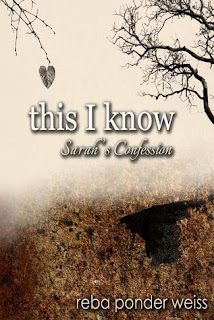
     With these questions in mind, I decided to turn to Reba Ponder Weiss, one of my Twitter writing pals, whose apocalyptic suspense novel Sarah's Confession: This I Know does a great job shattering Christian fiction stereotypes. Enter the giveaway below!

Interview with Reba Ponder Weiss, Author of Sarah's Confession: This I Know

What is your religious background, and how did that influence your novel?
I was raised in an ultra-conservative Southern Christian household.  Biblical principals were a part of my everyday life.  This influence caused me to ask hidden questions within my books.  Why do we believe what we believe?  At what point, if ever, do we question or “go up against” what we believe?
 
In your opinion, what is the difference between an author who is a Christian and an author of Christian books? 
People always say, “Write about what you know.” I know about Christianity.  It has been a part of my life—my whole my life.  Sometimes I welcomed it.  Sometimes I ran.  I think my personal journey is similar to a lot of people who struggle with Faith and life in this broken world. 

I also become frustrated by people who want “Christian Literature” to fit inside some little, pretty box, with a safe, satin bow.  Christianity and our relationship with Jesus Christ, seldom if ever, fit inside a nice little package.  We struggle, fall, sin, doubt and deceive ourselves.  In other words, my Non-Fiction Christian Life doesn’t follow a formula and therefore my Christianity Fiction Thrillers reflect that messy life.  

Oh, and just a personal note to all my Christian brothers and sisters out there in the book world. The next time you hear yourself saying the words, “She is not a Christian writer,” “That man calls himself a Christian and then he writes about the paranormal,” or “They didn’t have a person falling to their knees and asking Jesus to be their personal Savior.” Please, please, please…do not judge others. There is enough secular stuff out there to go around the world, if a person cares about the Christian market, don’t discourage it. Only God knows a person’s heart and when you presume you can decide if a person is a Christian or not…well, let’s just say…God is God, and you are not Him.

How is your book different than the "typical" Christian novel?
I want my readers to go beyond the comfortable feeling of, “I have everything figured out.” I want them to test what they believe and ask some hard questions. 

We go through life saying things like, “I would NEVER do that,” or “I believe this or that,” but we rarely get an opportunity to test these statements under duress.  We never really know what we would do, until we find ourselves in a situation that separates the men from the boys.  I have one personal experience to share.  When I was a very young girl, one of our neighbors had a husband who beat her daily.  I made the arrogant statement, “I would NEVER live with a man that beat me!”  Guess what?  I lived in an abusive situation for almost 20 years! When people say grandiose things like, “Oh, I would never eat English Peas—I hate them.” Really? If you were without food for three days, and someone gave you English Peas, you would turn up your nose and go hungry? I think not.  Be careful what you say, one day you may be tested.  At the end of my book I want the reader to ask themselves, “What would I have done?”
  

What kind of audience were you writing for?
My target audience is women over the age of 35 who are tired of reading their grandma’s romance novels.  They are a little cutting edge, want to be challenged and like feeling a little disturbed.  Maybe they loved reading Thrillers or Horror Stories as teenagers and want the same books without all the vulgar language and sexual details. 


Want to brag to us about Sarah's Confession? I know it's won some awards, so give us your best stats!
 My Southern Book Tour 2012 was featured in Elk Valley Times (Fayetteville, TN) and The Cullman Times (Cullman, AL), along with television interviews on Channel Two (Cullman, AL) and The Morning Show WCQT-TV Channel 27 (Cullman, AL). Several websites have featured “This I Know – Sarah’s Confession” on blogs and book reviews.  Recently, it was awarded “Suspense Thriller Author 2012” from Checkeditout.  The Video Book Trailer was awarded “#1 Best Book Video March 2013” by Yougottaread.com.  My social networks have exploded in the last six months with over 10,000 followers on Twitter and over 2500 views of the Video Book Trailer, on YouTube. Not bad for a little country girl from the rural fields of Alabama.

***

Get In Touch: If you want more information about Reba, see www.rebaponderweiss.com
facebook.com/reba.weiss
twitter.com/rebaponderweiss

Get The Book: Reba's novel is available as an ebook or paperback.

Enter The Giveaway: Sign up below to win a free (gently read once by me!) copy of Sarah's Confession. (Shipping to USA only. Sorry!)

a Rafflecopter giveaway

Tuesday, April 30, 2013

Literary Things: A Christian's Response to Fantasy Novels

     There were certain rules we had growing up. As children, we didn't watch questionable movies. We didn't discuss certain subjects. And we didn't read any fantasy.

     Fast forward about two decades, and I'm now the mother of an avid bookworm who recently discovered the Percy Jackson series by Rick Riordan. This series, if you're not familiar with it, is Disneyland for mythology lovers. My son Nate has read about a modern-day, turban-sporting Medusa; a son who rescues his mother from Hades; and a god of revelry who now only drinks Diet Coke as part of his twelve-step program.

     I've asked myself several times how I feel as a Christian about fantasy novels, and I usually end up answering myself with, "I have no stinking idea," or something equally as helpful.

     I recently read a novel by one of my cyber writing buddies. First of Her Kind by K. L. Schewengel is exactly the kind of book my father would have banned when I was growing up: the heroine's aunt is a devoted servant of The Goddess, the heroine herself possesses magical powers beyond her control, and the hero possesses many "out-there" talents like miraculous healing and mystical telepathy.

     I read First of Her Kind and enjoyed both the writing style and the plot line. Nothing in the book threatened my faith or shook my relationship with the Lord. But it was still a stretch for me -- both as a reader and as a Christian -- to read something so drastically different from my typical weekend book list (which lately has included Les Miserables, a Christian historical fiction novel by the Theones, and a mystery set in turn-of-the-century New York City).

     Positive arguments could be made for Christians to read fantasy. The characteristic good versus evil motif was strong and kicking in First of Her Kind, and I'm sure if I wanted to I could find parallels between how Christ helps deliver us from evil and how the hero defends the heroine in Schwengel's novel. (For the record, I was much more into enjoying a fun weekend fling with a good book than I was expecting to delve deep into theological matters.)

     I think an even more convincing argument for fantasy is exemplified by my son Nate, the fantasy fanatic of our household. Nate has a colorful, vivid, beautiful imagination, which has been nurtured by years of reading. Nate can dream up masterpieces of imaginative creativity because his mind has been stretched by all the books he's devoured in his short lifetime.

     As I've grown in my gifting as an intercessor (one who prays passionately for certain people or causes), I've discovered that the most powerful prayers require an awful lot of faith. And faith, in my opinion, can be bolstered, encouraged, and nurtured by an active imagination. My times of deepest intercession have involved vivid mental pictures of how God might answer my prayers. What else could you call that besides imagination?

     So if prayer is bolstered by imagination, and if imagination is inspired by works of fantasy like my friend's novel, could devouring fantasy like my son Nate does end up boosting someone's prayer life?

     Who knows? I have no idea if Nate is going to develop the same heart for prayer as I have, or if his love for fantasy will enhance his prayer life or not. But it's at least given me something to think about and chew on over the next few years as I watch how he grows as a Christian ... and how I grow as a reader.

     And by the way, I think First of Her Kind is definitely a book worth reading, regardless of your spiritual background (or lack thereof!). So I'm setting up a giveaway over the next week. Just check out below to see how you can enter to win K. L. Schwengel's novel. (Sorry, US shipping only.) And if you'd rather just grab the ebook, I highly recommend it!

Random Fact #15: The Red Violin was the first R-rated movie I ever saw. I was 17 and watched it with my mom.

Did you know? My Christian novel about a young girl in North Korea is free for the next few days on kindle in honor of North Korea Freedom Week. Get The Beloved Daughter free!

a Rafflecopter giveaway

Monday, April 22, 2013

Christian Home Magazine: The Boy Next Door

What's up with this photo?
     I've worked some pretty strange jobs in my life, as you may have noticed from a previous random fact I posted about performing my first autopsy at the age of 16. One of the funniest jobs I've ever had was working as a caregiver at an assisted living home.

     Although many people might pity them for their situation, the residents were (for the most part) happy and content. One day I served up a sloppy joe to one of the ladies, and she spent the next half hour thanking me profusely for the delicious crab. Another women didn't remember her children, her grandchildren, or even her own name, but when her husband came to visit her she showed an incredibly three-second display of lucidity and told us all, "That's my baby."

     Every once in a while, I tried to tell the people I cared for about the Lord, which also led to some hilarious conversations.

     "Do you know Jesus?" I asked one lady as I was helping her take a shower. I didn't consider myself an exceptionally bold believer, but my husband and I were preparing for the mission field and I figured I needed the practice.

     "Who?" Estelle croaked.

     I had to repeat the name four times until she heard me. "Oh, Jesus," Estelle replied, "yes, of course I know him."

     "So how long have you been a Christian?" I questioned.

     "What?"

     "How long have you known Jesus?"

     "Oh!" Estelle laughed and seemed delighted at the memory. "I played with him when I was a little girl. He was the little boy who lived next door."

     My husband and I shared some pretty good laughs at my feeble evangelism attempts, which were made all the more humorous since I had to shout at most of the residents so they could hear me, and even then -- as my conversation with Estelle exemplifies -- I'm not sure how much they understood. As funny as the stories are though, I admit that sometimes I got frustrated.  I was telling the residents about Jesus, or at least trying to. But what was the point if they thought I was just talking about the boy next door?

     And then I realized something. Without God's help nobody can understand the good news of salvation, no matter how lucid they are at other times. Maybe I just needed to keep on sharing and leave the results of to God.

     I didn't end up working at the assisted living home for all that long, since I got pregnant with our first son only a few months after I started the job. I sometimes wonder about the residents there, if anything I said really made a difference in their spiritual lives.

     I guess I'll asked Estelle when I get to heaven if the boy next door is still there.

Random Fact #9: I earned $5.15 an hour at my first job.

Monday, March 25, 2013

Decoding Christian Cliches

What's up with this photo?
This post appears in the Christian Home Magazine. Check it out!

     I've been working on editing my manuscript for "The Beloved Daughter," my debut inspirational novel set in contemporary North Korea. One of the hardest parts about the editing process was taking out all the American figures of speech that worked their way into my manuscript. The narrator of "The Beloved Daughter" is North Korean. She doesn't say things like, "it nearly made me jump out of my skin," or "she really hit the nail on the head," or any of the other phrases that no one in Korea uses but all my American readers would understand.

     Taking that red pen and crossing out all my instances of Americanizations got me thinking about cliches in general. Have you ever stopped to think about all the favorite expressions we use in the English-speaking church today? What would happen if one of the Korean nationals from my novel stopped in a women's Bible study at your place of worship? Even with impeccable English skills, she's probably need a translator just to help her sift through all the figures of speech we Christians throw around like they're going out of style.

     For example...

  1. "I'll be praying for you." Please note: One-tenth of the time, this phrase means, "I'll be praying for you." The other nine-tenths of the time, this phrase means, "I have no idea what else to say about your problem, so I'm going to end this awkward conversation with a promise to pray about your situation." Of the nine-tenths of the people who use this particular phrase in this particular way, about three-tenths will actually follow through and pray for you. If you're lucky.
  2. "I have Jesus in my heart." Fact: Jesus is in heaven. (Remember that whole promise He gave us about preparing a place for us? Yup, that's going on right now.) Fact: The Holy Spirit ... not Jesus ... indwells believers at the moment of conversion. (One more interesting fact to throw out: There are nine verses in the NIV that have both the word Jesus and the word heart in them. None of these nine verses talk about Jesus actually living in someone's heart.)
  3. "I'm going to throw out a fleece." Unlike number 2 above, this cliche actually has a biblical basis. When Gideon wanted to be sure God was really going to help him defeat the Midianites, he literally threw out a fleece and left it outside overnight. In the morning, the fleece was covered with dew but the ground around it was dry. Thus Gideon "threw out a fleece" to help him determine God's will. Today, however, if a Christian says, "I'm going to throw out a fleece," what she usually mean is: I really want God to do [prayer request XYZ]. And so I'm going to pray something like, "If the next person to call me on my phone is Jill from Illinois, then I'll know that God is promising to do [prayer request XYZ] like I asked Him." Now, if Jill really does call, our fleece-thrower can look forward to [prayer request XYZ] with great joy and gusto. But if the next person to call is actually Ralph from Montana, then the lucky fleece-thrower can say something like, "O well, we're not supposed to put God to the test so that probably wasn't an accurate fleece anyway." (She'd probably have similar results with a  fortune-telling 8-ball, but those tend to be frowned upon in Christian circles for some reason or other.)
  4. "Meet-Market Issue." Here's one more cliche based on a particular passage of Scripture. In Bible times, the church in Corinth had a major dilemma. There were some serious carnivores in their congregations, but a large portion of the meat sold in the marketplaces was at one point sacrificed to idols. Paul encourages the Corinthians to basically follow their own consciences: "Whether you eat or drink or whatever you do, do it all for the glory of God" (1 Corinthians 10:31). Today, Christians use the term "meat-market issue" to describe any of those controversial activities that some Christians say are big no-nos, and other Christians say are kosher. If you declare something to be a "meat-market issue," you are saying that you're going to follow your own conscience, and you'll take difference with any and every believer who tries to tell you you're wrong. Sometimes I wonder, however, if the issues that we're selling at our contemporary meat markets are really just sinful behaviors we justify via the Meat-Market Clause so we don't have to give them up.
  5. "...if it's Your will." I hear this one a lot at prayer meetings. Dear God, please heal Aunt Betsy. Help her eyebrows to grow back, and her nose to straighten out, and her chipped tooth to mend, and her bunion to soften up. IF it's Your will. Now, I'm all for praying in submission to God's will. (Think Jesus in the Garden of Gethsemane.) Unfortunately, most people use the "if it's Your will" line because they have no expectation for God to answer their prayers in the first place. What they're really telling God is: Lord, we both know You're probably not loving and/or powerful enough to take care of all these problems right now, so I'm just going to throw "if it's Your will" to the end of this prayer. That way we'll know not to expect all that much from You.
     I'm sure I'm just as guilty as the next Christian for using (and sometimes abusing) these and other Christian cliches. That probably doesn't make us bad people.

     But we better plan to take along a translator if we ever head out to North Korea.

What about you? What are some Christian cliches you hear all the time that I forgot to mention? (Feel free to leave your comment below.)


Monday, February 4, 2013

Sunday School Answers

This post is part of the 99th edition of Christian Home Magazine. Check it out!


     It's amazing how young kids are when they first learn how to respond to "God-questions." One day I was talking with my two year-old Thomas about the blanket his adopted auntie crocheted for him.

     "Do you like your blanket?" I asked.

     "Yeah." (It was hard to make out Thomas' response since two-fifths of his lovey was actually in his mouth at the time.)

     "Do you like to sleep with your blanket?" (This question asked by the mom who spends the last twenty minutes of every day searching for Blankey so Thomas can actually go to bed.)

     "Yeah."

     I figured our conversation was on a roll by now, so I kept it up. "Who made your blanket for you?" Now Thomas sees his auntie several times a week. She tucks him into bed with Blankey while Phillip and I are leading youth group. She talks to him about crocheting his blanket while he was still swimming around and having a blast in my uterus. Thomas knows where Blankey came from.

     But when I asked him who made his blanket, Thomas scrunched up his face, pondered painfully for a moment, and answered tentatively, "Did God?"

     I gushed. My toddler was thinking about God! He got the answer totally wrong, but he was thinking about God!

     On other occasions, however, I've tried to spiritualize things with my kids and my plans backfire. My oldest son Nate is a huge super-hero fan, so at his birthday party we came up with several games to reflect his passion for Marvel comic books and VeggieTale's League of Incredible Vegetables. At one point we played a game of super-hero trivia. I asked the kids a question and they had to shout out the answer as loud as they could.

     After a few warm-up rounds, I had this great idea to Christianize matters, so I asked, "Who's the biggest, strongest, best hero in all of history?" I thought my stress on the word history would be enough of a hint, especially after I repeated the question twice. Some kids did pick up my cue and replied, "God." My birthday boy, however, jumped up on the couch, ninja kicked the air, and bellowed out his answer:

     "THE HULK!!!"

     Yes, I blushed. Not so much because my son didn't get the "right" response, but because I had so shamelessly fished for a Sunday school answer.

    I'm not against Sunday school answers per se, but I get upset when I see them replace deeper discipleship. We tell our kids to forgive each other because the Bible tells us to. That's all fine and good, but are we preparing them to understand how difficult it might be to forgive someone down the road who leaves their souls brutally scarred? Or are we just teaching them to mumble a few words so Mom gets off their back?

     We teach teens in our our youth groups that if they want to grow in their spiritual walks they should pray and read the Bible. We teach them that if they want to resist temptation they should pray and read the Bible. We teach them that if they want to discern God's will for their lives they should ... you guessed it! Pray and read the Bible. Is it possible that our teens are ready for a little more meat, and a little less spoon-feeding? Is it possible that we can teach teens the importance of spiritual practices (all of them) without using specific disciplines as a cure-all for whatever trials they face in their Christian lives?

     I want my relationship with Christ to go beyond pre-programmed Sunday school answers. If a friend of mine is deeply hurting, do I tell her I'll be praying for her just because I don't know what else to say? Or am I prepared to delve with her into the deep woundedness of her spirit and anoint her with the healing power of heartfelt intercession? When a friend is confused and broken because God allowed a horrific tragedy to strike, am I going to just tell her that "God has a plan?" Or am I going to pour myself out trying to love her?

     I love the Bible. And I believe it contains everything we need for comfort, healing, growth, and discipleship. But I also know that the Bible can't be summed up in two or three of our favorite cliches. Life is messy. The Christian walk is hard. Sometimes we need more than pre-programmed Christian responses.

     After all, not many of us are as strong as the Hulk.

What about you? Have your kids ever surprised you with their Sunday school answers (or lack thereof)? How do you encourage those around you to go deeper than automatic "Christianese" responses? (Feel free to leave your comments below.)


Saturday, January 26, 2013

Bundle of Blessings

me and my bundle, seven years ago
This post appears in the Christian Home Magazine. Check it out!

     Today my son Nate turns seven. It's hard to believe this science-loving, marathon-racing, book-devouring bundle of sheer energy and creativity was one just ... well, a bundle.

     Nate was by far the most difficult of my babies. Which meant that when his two little brothers were born I was completely prepared for everything coming way way. (Or not.) All jokes aside, I certainly did learn a lot during my very first year of motherhood. So in honor of Nate's birthday, I am passing on to you the lessons brought to me by my first little bundle of ... well, you know.

1) Your definition of minor discomfort is not my definition of minor discomfort. I'm talking specifically about that fun day or two after delivery when your milk comes in. Ouch. What to Expect did NOT prepare me for that! Let's extrapolate for a moment, though. What you might experience as a tiny nuisance may be painful enough to have me walking at a 45 degree angle for a week. Or a month. Don't judge my reaction to something until you've walked in my shoes. Or worn my nursing bra.

2) Bring a change of clothes to church. It just so happened that Sundays were Nate's preferred day for blow-outs. One mess at church was so bad that my son had dirty squirties oozing out of his diaper, onto his back, then up and around his shoulder and torso. Two adults, 37 papers towels, and a very messy church sink afterwards, Nate was somewhat clean. The only problem is I forgot to bring his extra clothes that day.

     Moral? I've got two to offer. The first is to do what our current church does and keep a few baby outfits on hand for new and unprepared parents facing similar emergencies. The second is to realize that Nate actually had it right; Sundays should be the one day of the week where we are most willing to show our "muddier" selves. Instead we spend Sunday mornings pretending that everything in our lives is smooth as a baby's you-know-what (and I'm talking about a clean baby here, by the way).

3) Breastmilk is sweet. Unless it's regurgitated. Yes, I'm the mom who got spit-up in her mouth. Her open mouth, to make matters worse. In my defense, my novel experience of tasting my own curdled milk was the result of a fun Super-man style game that had my baby giggling and smiling. It also gave Nate's spit-up the perfect route to land on my tongue and glide effortlessly down my throat as I laughed at my charming little superhero.

     Do you need me to tell you that it wasn't all that pleasant? How many of us, unfortunately, have shocked or disgusted others by the things we "spit up" when provoked? With all the death and bitterness we can spew out, it's no wonder God calls the mouth an open grave (Psalm 5:9).

4) Healing doesn't make your scars disappear. Seven years ago, my doctor cut me up, pulled back my abdominal muscles, spliced open my uterus, and yanked out a six-pound, fifteen-ounce alien. All right, he was actually a baby, but since I had never seen a brand-new, fresh-from-the-womb infant before, I truly was surprised at Nate's appearance. (Not quite the Gerber baby I expected. Not yet, at least.)

     Four weeks after my C-section, I stopped taking pain meds. Four weeks after that I stopped feeling sore. But seven years later, I've still got a scar.

    You know the story about the woman in labor that Jesus tells his disciples? She's in pain at the time, but once her baby is born she "forgets the anguish because of her joy that a child is born into the world" (John 16:21). I'm glad I'm no longer in labor. I'm glad my incision site no longer feels like a thousand red fire ants are trying to reopen my wound from the inside. But I've still got that six-inch scar. 

     When I think about my life's journey, I'm thankful for the healing God has brought me after that painful tests I've suffered. I see the good that's come from the trials I've had to endure. But my memory hasn't been erased. My scars still remain. So do yours, if you're anything like me. And that's nothing to be ashamed of.

     Today I celebrate the life of an amazing seven year old boy. And I thank God for all the blessings the Almighty sent down to me wrapped up in that cute, cuddly (and sometimes very messy) bundle of joy.

What about you? What has parenthood taught you about life, the Lord, or the more unsavory sensations of infancy? (Feel free to leave your comment below.)

Sunday, January 13, 2013

Becoming Ms. 31


What's up with this photo
?

(This post appears in the Christian Home Magazine. Check it out!)


     This year, I only have one resolution: to be more like the ruby-surpassing, praise-worthy wife who is esteemed by all, envied by most, praised by her children, adored by her husband, and held up for all women emulate to emulate in Proverbs 31. I admit it's a high calling, which is why I have actually written down, verse by verse, how I have been doing thus far on my journey towards Proverbs 31 loftiness and what practical steps I need to take to achieve Ms. 31's degree of wifely perfection before the year is over.


     "She brings [her husband] good, not harm, all the days of her life" (12). When I think about what harm I have brought my husband, that lentil-ball disaster is the first thing that comes up. Since I no longer use "vegetarian" and "new recipe" in the same sentence when describing dinner plans, I think it's safe to say that I don't bring Phillip harm (at least not very regularly). But do I bring him good? And whose standards are we using to determine what's "good"? His? If so, then I suppose I'll add ordering pizza and chicken wings to my weekend to-do list. Then I'll sit back and listen to my husband's ceaseless praise.

     "She works with eager hands" (13). My hands are very eager, at least when they're flying at 80 words per minute when I'm absorbed in a writing project. Unfortunately, I find my hands a little less than zealous when it comes to things like folding laundry and washing dishes. But since I do "work with eager hands" at least several hours a day behind my computer screen, I suppose I'll check this verse off my to-do list.

     "She is like the merchant ships, bringing her food from afar" (14). You know, up until I started really taking this Proverbs 31 thing seriously, I always felt guilty for ordering food in or dining out. After all, our family could full sponsor two children a month with the money it takes for one nice dinner out. But Mrs. 31 obviously offered her family a culturally-diverse culinary experience. Since there are no ships to bring us food from afar, I guess I can settle for taking the family out to more ethnic restaurants. Chinese, Vietnamese, Mexican ... I'm willing to try it all (for the sake of Proverbs 31-endorsed righteousness of course). There's even a Himalayan joint in town. I guess I'll make my reservation tonight. One more step down towards realizing the Mrs. Ruby ideal.

     "She provides food for her family and portions for her servant girls" (15). Like so many other verses in Scripture, this one is actually liberating when followed to the letter. My family has yet to starve, so I guess I'm managing the first half of The Noble Lady's job description just fine. But you know, it's hard to offer portions to my servant girls when I don't have any (servant girls that is ... we have plenty of food). This year's resolution: to hire a full staff for my home, so I can more accurately emulate my purple-clad mentor's habit of waking up while it is still dark to feed them all. (Just out of curiosity: why is the mistress of the home getting up early to feed her servants? Doesn't this seem to nullify the benefits of hiring servants in the first place?)

     "She considers a field and buys it; out of her earnings she plants a vineyard" (16). I love this verse. Specifically, I love what's left out of it. Can we make the argument from silence that Ms. Success just goes about these business ventures of hers without consulting her husband whatsoever? Whether or not our businesswoman is acting under Mr. 31's authority, there's no doubt about it: In a time when most women couldn't boast a single dime (or drachma) to their names, our entrepreneurial diva is out buying, selling, and reinvesting her capitol gains. I may not be ready to take out a 30-year lease on an uncultivated field, and I don't know nearly enough about grapes to grow a whole vineyard, but I can host a Scentsy party, right? (Consider yourselves invited.) And with my earnings I can buy some Tupperware! ... I'm so close to Proverbs 31 feminine utopia I can almost taste it!

     The whole section about the noble-charactered, spindle-grasping wife of beauty and grace lasts for several more verses, but the closer I look at it, I'm not sure our family budget can handle all of my resolutions towards Proverbs 31 perfection. Maybe after my metaphorical field-buying and vineyard-planting ventures take root (no pun intended) I'll be able to imitate Mrs. Perfect in even more ways, like making sashes for my favorite merchants and holding the distaff in my hands (once I find out what distaff is and figure out where to buy some. Do you think Pinterest can point me in the right direction?).

     For now, if we can't afford a whole house full or servants and ethnic dinners out every week, I suppose I can just sleep with the light on. That way, even if I fall short when it comes to every other description of Proverbs 31 perfection, I can at least say I've got one verse covered: "Her lamp does not go out at night" (16). 

     Guess it's time to go invest in a sleeping mask. At least that's one purchase the budget can handle.


Saturday, January 5, 2013

Off The Hook

What's up with this photo?
 (In case any of you read about my newest "project" and worry that I've given up my characteristic love for correct Biblical interpretation, please note that this post first appeared in the humor section of the Christian Home Magazine, 95th edition.)

     A few months ago (after writing the opening lines to no less that fifteen dozen books over the course of nearly three decades) I published my first title, A Boy Named Silas. Just a couple weeks later, I signed a book contract with a company that publishes great fiction for contemporary homeschoolers. Now that I'm an actual, bona fide author I've started thinking about my next project. I like the idea of doing a Bible study, but God has so many demands in Scripture that I'm not it would sell very well.

     I mean, how many times have you picked up a Bible study about being a better Christian, then realized you'll never match up to the Lord's expectations? It can be pretty discouraging, right? It seems like these books that spell out God's commands verse by verse just won't ever top the charts. And since I'm in this whole writing thing for fame, fortune and glamor, topping the charts is exactly what I've set out to do.

     That's why my first Bible study book will feature my ten favorite "Off-The-Hook" Bible verses. I'm so excited about this project, I've even written up the first five chapter summaries! I'm really crossing my fingers that this book is going to fling me rear-end first into the world of inspirational Christian teaching and writing, and since you readers were with me from my humble beginnings, I'll let you have a sneak peak at a few of my featured chapter headings:

     "God loves a cheerful giver." (2 Corinthians 9:7) For all of you out there who struggling with tithing, this is the verse for you! God wants you to be cheerful when you offer him your money. Logical conclusion: if you're not cheerful about it, don't do it! You're off the hook! (See how easy this is?)

     "Each one of you also must love his wife as he loves himself, and the wife must respect her husband." (Ephesians 5:33) If you squint your eyes really hard, you'll see that this passage teaches all you wives out there that you only have to respect your husband if he is holding up to his half of the bargain. Are you having a hard time respecting a man who's not loving you like he should? There's good news for you, wives! You're off the hook! (Husbands, you should also feel free to use this verse to justify ignoring, depreciating, or insulting your wife on a regular basis if she refuses to respect you.)

     "God works for the good of those who love him." (Romans 8:28) I find it too emotionally draining for me to really, truly grieve with those who are mourning. I feel uncomfortable when my loved ones are suffering because their pain seems so overwhelming and I don't know what to say. Thankfully, I have a simple cop-out. I just quote Romans 8:28 to them and I'm off the hook!
  
     "For those God foreknew he also predestined." (Romans 8:29) While we're in Romans 8, let's just hop on verse farther. Romans 8:29 tells us that God has already predestined those who are going to be saved. Do you have a hard time sharing the gospel? Does it make you feel uncomfortable telling people they need Jesus' forgiveness? No problem! God already knows who is and isn't going to be saved, so you're ... (you guessed it) ... off the hook!

     "Your Father knows what you need before you ask him." (Matthew 6:8) Nothing should alleviate your guilt over a ho-hum prayer life like this verse. God already knows what you need ... even before you pray! Take it one step further and you can obviously conclude that there is no reason to pray at all. You are, once more, off the hook!

     These are the first five verses I've picked out for my "Off The Hook" Bible study. Believe me, there are plenty more good ones out there. So many, that after I write my initial ten-chapter book, I just may need to come out with a sequel. All I need to do now is send my chapter summary off to the publishers and see if they start a bidding war over my title.

     I'd probably do it too ... if I wasn't just a little bit scared that someone actually would decide to put this title in print. And if a book like this every became a best-seller ... well, that would speak volumes about the state of American Christianity now, wouldn't it?

What about you? Do you have a verse you'd like to add to my Off-The-Hook Bible study? Or a verse you feel is often misquoted or pulled out of context? (Feel free to leave your comment below.)

Tuesday, November 27, 2012

At Least I Didn't Forget the Baby


(This post was included in The Christian Home Magazine Issue 91. Check it out to read what other Christian bloggers have to say.)


What's up with this photo?
     I got to church early today. Which is miraculous in its own right considering I have a toddler, a preschooler, and a first grader who still hasn’t mastered that whole zip-up-your-own-coat rite of passage into full winter independence. And it’s definitely winter here, if you were wondering.

     I actually didn’t just happen to show up at church before my usual 10:34 am entrance. (I am of the persuasion that four minutes late is completely acceptable. It’s a lot like the speed limit, I figure. As long as you’re not five over, nobody’s going to give you a hard time about it, right?)

     Showing up early to church today, along with my three bundled Eskimos, was actually a pre-meditated feat. You see, apparently some people in our congregation feel I must have the spiritual gift of janitor, because I’ve been asked to clean the church building once a week (which, I assure you, would never have happened if any of the deacons had ever stepped foot into our home. Let this be a lesson to you to always invite your deacons over for dinner at least once in your early days attending a new church).

     Anyway, this morning I was cleaning the men’s room (a sanctifying work in itself) and I decided that my long hair was definitely not an asset at that moment. (Another point at which long hair becomes a liability: changing poopy diapers. But I digress…) As I went to pull my hair up, I realized: I didn’t brush my hair today.

     All right. There’s something you need to know about me. I am not high maintenance. I brush my hair for exactly one minute a day: half a minute in the morning, and half a minute at night. But today, in the rush of getting three pairs of coats, three pairs of mittens, and three pairs of boots on my three little snow babies, I not only forgot my own coat; I apparently also forgot to brush my own hair.

     With my tangles pulled back for the rest of the morning in a messy bun, I’m sure nobody noticed my grooming faux paux. (In case anybody’s wondering, I still haven’t brushed my mange and it’s close to bedtime now.) The truth is I’m often forgetting things, only to notice my mistake at the most inconvenient times. You don’t even want to know about shopping trip I had almost completed before I realized I had forgotten to put on my bra. And this happened at about three in the afternoon!

     Whenever I feel like I must be losing part of my brain (blame it on three full-term pregnancies and two miscarriages) I encourage myself with the thought: At least I’ve never forgotten my kids.

     Maybe I shouldn’t joke about it, because I know some parents who seriously traumatized either themselves or their offspring by doing that exact thing. One night in youth group we were discussing the verse about how a mother can never forget the children she has borne, and the conversation took a fifteen-minute turn towards the ugly as everyone shared stories of how their parents lost them at some point or another. Let me assure you, that as soon as I forgot one of my kids somewhere, I’ll post a column about it (once Child Protective Services is through with me, that is).

     What I’m trying to say is that we women have to constantly juggle so many tasks and roles (not to mention handbags) that it’s no wonder we forget things every once in a while. But I figure that as long as we’re not forgetting the really important stuff, we must be doing all right.

     But what exactly is this important stuff (besides the baby), you ask? Each woman is going to have her own list, but a few things are probably universal to all of us.

     For example, never forget to be thankful. Even during hard times. Even on bad days. Gratitude is not an option, at least not according to Scripture. So let’s “enter His gates with thanksgiving and His courts with praise” (Psalm 100:4) every day of the year … not just on days when we’re stuffing turkeys and drawing the play-by-play schematics of our Black Friday plans of attack.

     And what about this one? Never forget that “the tongue has the power of life and death” (Proverbs 18:21). It’s no wonder that James says the woman who learns never sins with her mouth has reached total perfection. Our words can breathe life and hope to those we love, or completely tear them down. When we forget to “tame our tongues,” we can actually speak words that bring death … death to dreams, death to trust, or death to relationships. Not a pretty picture, is it?

     In addition to cleaning urinals (did you know those things actually flush?) my Sunday included a pretty sad reminder that we should never forget how short life is. Our kids may drive us crazy. Our spouses may never get over that one bad habit that's been driving us bonkers for years. But our loved ones might not be with us tomorrow. Are we going to let petty inconveniences ruin our relationships?

     When I worked at an assisted living home as a caregiver, I met a woman who couldn’t remember her name. She couldn’t remember what she ate for breakfast. She couldn’t remember who her husband was, how many children she had, or what she was doing living on the Alzheimer floor. But she remembered a song, a song she sang to herself all the time. In spite of her Alzheimer’s, she still remembered Jesus loves me. Which brings me to my last point:

     Never forget that you are loved. You and I might forget to be thankful. We might forget to hold our tongues. We might even forget to pick up our kids, or – maybe worse - forget to cherish them. But just like Martha on the Alzheimer’s floor, may we never forget: Jesus loves us, this we know for the Bible tells us so.

     Because that would be even worse than forgetting to wear a bra to WalMart.

What about you? When has your memory gotten the better of you? Have you ever forgotten something really important (like the kids)? (Feel free to leave your comment below.)